

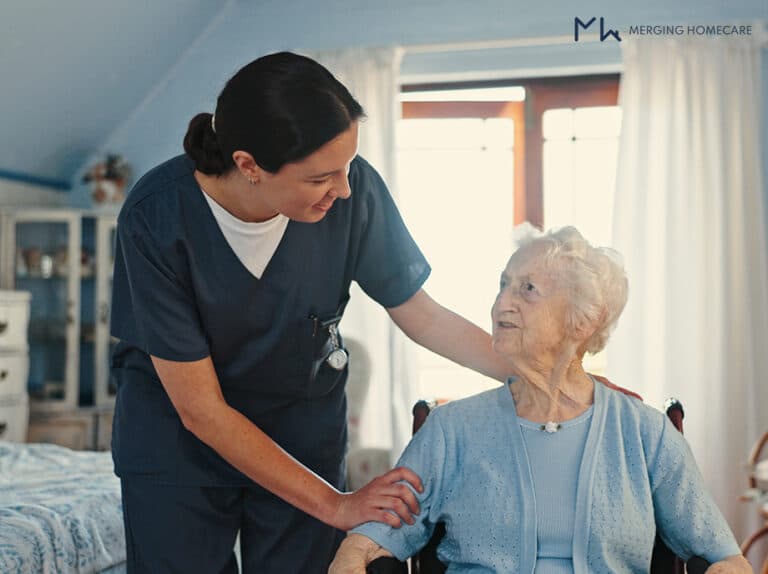
When families start looking into home care for an elderly parent, personal care is often what they have in mind, even if they do not use that exact term. They want to know: Can someone help Mom with her shower? Can someone make sure Dad gets dressed properly in the morning? Is there someone who can help him out of bed safely?
These questions are practical, but they are also personal. This guide explains what personal care services include, how Merging Homecare approaches them, and what families should know about dignity, flexibility, and changing care needs.
Part 1: What Personal Care Covers
1. What is included in personal care services?
Personal care refers to hands-on assistance with activities of daily living, or the everyday tasks that can become harder to manage independently as a person ages or their health changes. At Merging Homecare, personal care services include:
- Bathing and showering assistance: Support with safe bathing, including sponge baths when a bath or shower is not suitable.
- Dressing and undressing: Help choosing clothing, managing fasteners, and getting dressed comfortably.
- Grooming: Support with hair care, shaving, nail care, and general personal presentation.
- Oral hygiene: Support with brushing teeth or denture care.
- Toileting and continence care: Help getting to and from the bathroom and managing incontinence products with privacy and dignity.
- Transfer and mobility assistance: Help getting in and out of bed, chairs, or vehicles, with support adapted to the mobility aids a person uses.
- Medication reminders: Reminders to help seniors follow their medication schedule.
- Skin care and positioning: Support with comfort, skin care, and repositioning for people with limited mobility.
These supports are available through our broader Personal Care service, alongside all the other services we provide for seniors and families.
2. Can caregivers help with bathing?
Yes. Bathing assistance is one of the most commonly requested personal care services. The bathroom can also become difficult to navigate safely when mobility, strength, or balance changes.
Depending on the person’s needs, a caregiver can prepare the bathing area, provide support getting in and out of the shower or bath, and assist with washing, drying, and dressing. Sponge baths can also be provided when using a bath or shower is not safe or practical.
Bathing assistance is always provided with respect for privacy. Caregivers are matched carefully to clients, and we take comfort with the person providing this level of support seriously. Privacy and dignity are central to personal care, a core value detailed on our About page.
3. Can caregivers assist with dressing?
Yes. Dressing assistance can include choosing clothing for the weather or plans for the day, managing buttons or zips that have become difficult, helping with footwear, and making sure the person is comfortable.
For many older adults, choosing and getting dressed in their own clothes is a big part of maintaining independence and dignity. A caregiver should support those choices rather than take over the routine.
4. Do caregivers help with grooming?
Yes. Grooming support includes hair care, shaving, nail care, and oral hygiene. For many seniors, these routines become harder to manage as strength, dexterity, vision, or mobility changes.
Personal grooming also supports comfort and self-confidence. Feeling well-presented can help someone feel more comfortable seeing family, going out, or taking part in their usual activities. Our dedicated personal grooming service ensures these daily care routines are handled with expertise and care.
5. Can someone help my parent get out of bed?
Yes. Transfer assistance helps a person get in and out of bed safely and is an important part of personal care for many seniors. This requires appropriate technique and an understanding of any mobility equipment being used, with attention to safety for both the client and caregiver.
Merging Homecare caregivers are trained in safe transfer techniques and work with mobility aids already in the home, including bed rails, transfer boards, hoists, or walkers, based on the individual’s care plan.
6. Can caregivers help with toileting?
Yes. Toileting assistance includes helping a person get to and from the bathroom safely and managing continence products when needed. For many families, it is also one of the more difficult parts of care to talk about.
We understand that this can feel uncomfortable for both the person receiving care and their family. Caregivers approach toileting support discreetly and matter-of-factly, with respect for the person’s privacy and comfort. Incontinence care, including help with pads and garments, can be included where needed, alongside careful attention to hygiene, skin care, and comfort.
7. Do caregivers provide hygiene assistance?
Yes. Personal hygiene assistance can include oral care, skin care, hair washing, and other support that helps a person stay clean and comfortable. For seniors with limited mobility, it may also include help with routines that have become difficult to manage independently.
For seniors with cognitive decline, personal hygiene can become more complex. Someone living with dementia may resist bathing or become confused by the routine. Caregivers who work with cognitive decline use a calm, consistent approach and adapt the process to help reduce distress. If your parent has dementia or memory loss alongside personal care needs, our Cognitive Decline Support service provides specialized care for both.
Part 2: Mobility, Customization, and Changing Needs
8. Can caregivers help with mobility?
Yes. Mobility assistance is an important part of personal care for seniors who have difficulty moving safely around the home. Everyday activities such as standing from a chair, using stairs, or getting to the bathroom can become more challenging as mobility changes.
Merging Homecare caregivers provide support throughout the home. This may include steadying someone while they walk, helping with stairs or transfers, and providing support when balance is a concern. Caregivers may also notice changes in how a client is moving and share those concerns with the family or care team.
Mobility support may be part of our Personal Care service or our Seniors Living Independently support, depending on the person’s specific needs.
9. Is personal care customized?
Yes. Personal care should reflect the individual. The type and level of support can vary considerably, even between seniors with similar health conditions.
At Merging Homecare, the care plan starts with a discovery conversation. We learn about your loved one’s daily routine, what they manage independently, where they need help, and how they prefer that support to be provided. Preferences matter. Someone who has always bathed in the morning should not have to change that routine simply because care is being introduced.
Matching is part of that process. We consider care requirements alongside personality, communication style, language, cultural background, and scheduling. A good match helps personal care feel more comfortable and consistent over time. To learn more about our caregiver matching process, visit our About page or see common questions on our FAQ guide for families.
10. Can care plans change as needs change?
Yes. One of the practical advantages of home care is that support can be adjusted as a person’s needs change.
Care needs rarely stay exactly the same. Someone who needed help with bathing and dressing six months ago may now also need mobility support. Another person may have needed more help after a hospital discharge and gradually require less as they recover.
Merging Homecare conducts ongoing check-ins and care reviews to make sure the support your family receives continues to reflect your loved one’s needs and preferences. If the level or type of support needs to change, we update the care plan accordingly.
If you are already receiving care and your situation has changed, call 1-888-439-8585 or contact our team to arrange a care review.
Starting Personal Care with Merging Homecare
Getting started begins with a discovery call. We learn about your loved one’s needs, daily routine, and what matters most to them. From there, we design a care plan, match a caregiver, and arrange a start date. Care can often begin within a few days.
Families across Vancouver and the Lower Mainland trust us with their loved ones’ care. Personal care is deeply personal, and we approach it with the respect it deserves.
Ready to discuss your loved one’s needs? Book a free consultation today, or explore our Learning & Resources blog for more guidance on senior care.
Get our latest updates directly on Google!